
#11 Thimbleberry, Backpackers Friend


It's the time of year when all of the herbaceous growth that died away through the dry fall and cold of winter has thoroughly reclaimed its territory amongst the forest floor. A spectrum of colors, sizes, shapes, smells, and textures joins the view. Amongst them is a bright green leaf, wide and palmate like that of a maple, but soft and covered in a layer of luxuriously soft plant hairs.
One of the thimbleberries closest well-known relatives is the blackberry. Though, it's not far off from raspberries as well. All three are in the same genus of the rose family, Rubus, which contains around 1500 different species.
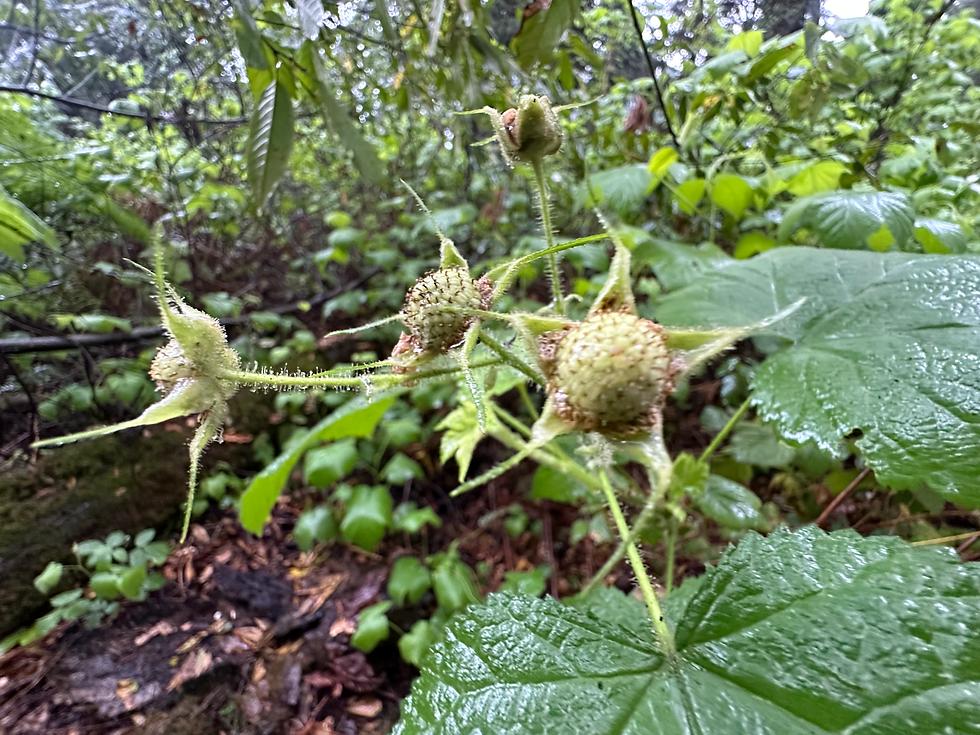
As we find ourselves in mid-April, the flowers of the thimberries of California’s coastal mountains are in full bloom, some even starting to begin to form the tart berries the plant is named for.
These pale-pink to red berries have a similar flavor to that of their red raspberry cousin, but far more tart. If I were to

describe a raspberry as a gummy bear then a thimbleberry would be a sour patch kid. These berries can be eaten raw or made into jams or preserves.
The delicious berries are not the only useful part of the thimbleberry plant, however. Its soft, strong, and dependable leaves can also save the day out on the trail and away from the usual luxuries of civilization.
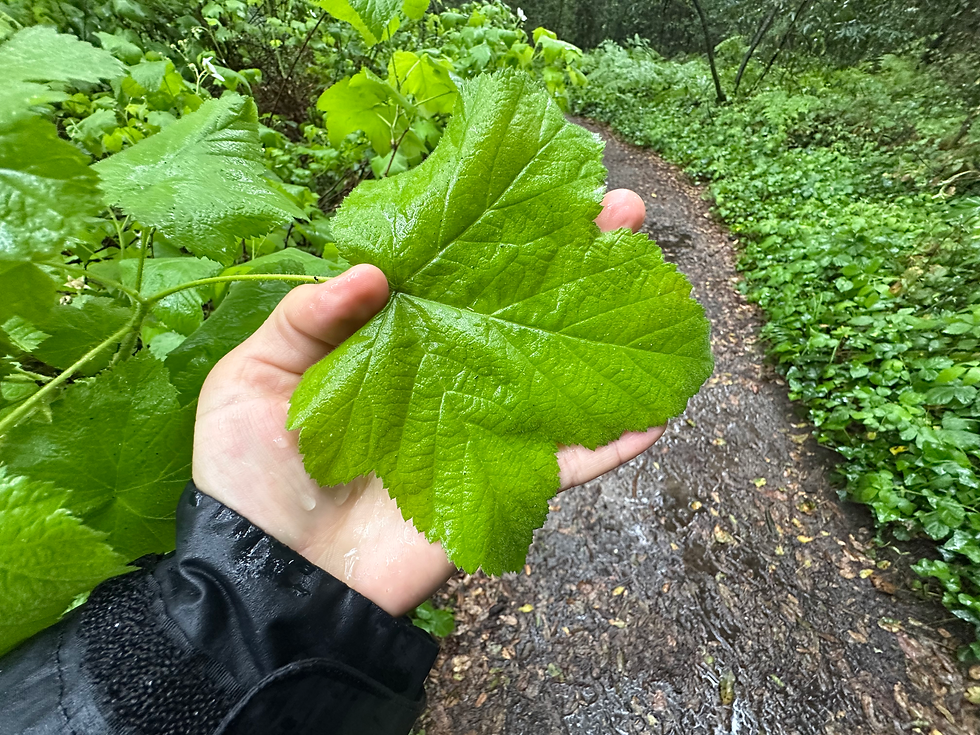
Thimbleberry has also earned itself the nickname of “backpackers friend” for being a dependable friendly leaf to turn to when one finds themselves needing to use the loo with a view.
What are your favorite berries that you can’t buy in a grocery store?


Comments